Why Do Mini Excavator Track Assemblies Keep Getting Loose?
Many excavator owners and operators run into this common headache: You just adjusted your mini excavator track tension, but after a few hours of work, the track goes loose again. It may wander while traveling, make strange noises on slopes, or even come off the track.
Today we are going to break down the main reasons why mini excavator tracks keep loosening, and share practical fixes to stop this recurring issue and extend your undercarriage service life.
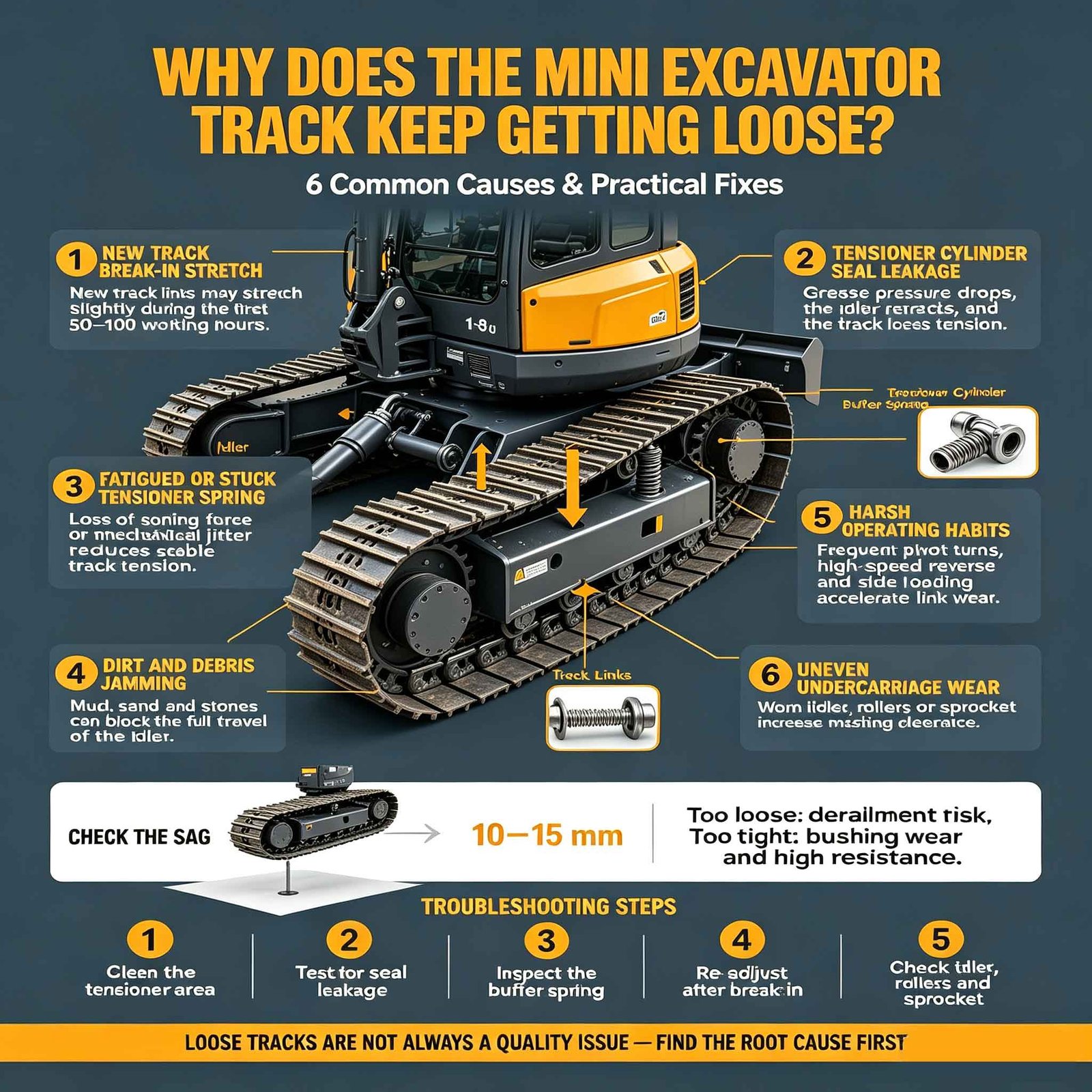
1. Natural stretch of new track assembly (most common)
Brand-new track links or rubber tracks will stretch naturally within the first 50–100 working hours. This is normal wear-in deformation, not a quality defect. After the track stretches, the clearance increases and tension drops, so it looks loose. ✅ Solution: Re-adjust the track tension once within the first week after installing a new track.
2. Tensioner cylinder oil seal leakage (No.1 culprit for repeated loosening)
The track tension relies on grease pressure inside the tensioner cylinder to push the idler. If the track tightens right after adding grease but loosens quickly after working, the oil seal inside the tensioner cylinder is worn out and causes internal leakage. The grease pressure cannot be held, the idler retracts, and the track loses tension. Adjusting the track alone will never fix this problem. You need to replace the seal kit.
3. Fatigued or stuck tensioner spring
Mini excavators are fitted with a heavy buffer spring for shock absorption on rough, stony ground. After long-term impact and heavy load, the spring loses elasticity or gets stuck. The idler cannot stay in the correct position, so track tension becomes unstable, tight one minute and loose the next.
4. Dirt and debris jam the tensioner travel path
Mini excavators often work on muddy sites, landscaping projects and tight construction areas. Sand, mud and small stones get packed into the tensioner gap and block the full travel of the idler. It looks like the track is loose, but the tensioner cannot extend fully. Many operators keep pumping grease and make the damage worse.
5. Poor operating habits speed up track stretching
A lot of track loosening is caused by operation:
- Sharp spinning / pivot turning on hard ground
- High-speed reverse travel
- Uneven loading on slopes These actions create side pulling force on track links, widen the gaps fast and raise the risk of track derailment.
6. Uneven wear of undercarriage rollers and idler
If the idler, track rollers or sprocket have uneven wear, the meshing clearance changes. Even if you set correct tension, the track will shake and loosen gradually when traveling.
Standard track tension reference for 1–8 ton mini excavators
The ideal sag at the middle of the track is 10–15 mm when the track is lifted off the ground.
- Too loose: track derailment, wandering, edge wear
- Too tight: bushing burn, broken links, high fuel consumption and walking resistance
Step-by-step troubleshooting to fix loose track
- Clean mud and stones from the tensioner assembly
- Test the tensioner cylinder for leakage; replace seal kit if needed
- Inspect the tensioner spring for fatigue or jamming
- Re-tension new tracks after the break-in period
- Avoid frequent pivot turning on hard surfaces
- Regularly check wear on idler, rollers and sprocket
Final summary
Most of the time, loose mini excavator tracks are NOT caused by poor track quality. The top causes are tensioner seal leakage, dirt blockage, bad operation habits and normal new track stretch. Find the root cause, and you will cut down frequent adjustment, reduce downtime and save your undercarriage cost.